
Employment Verification vs Experience Letter: What’s the Difference?
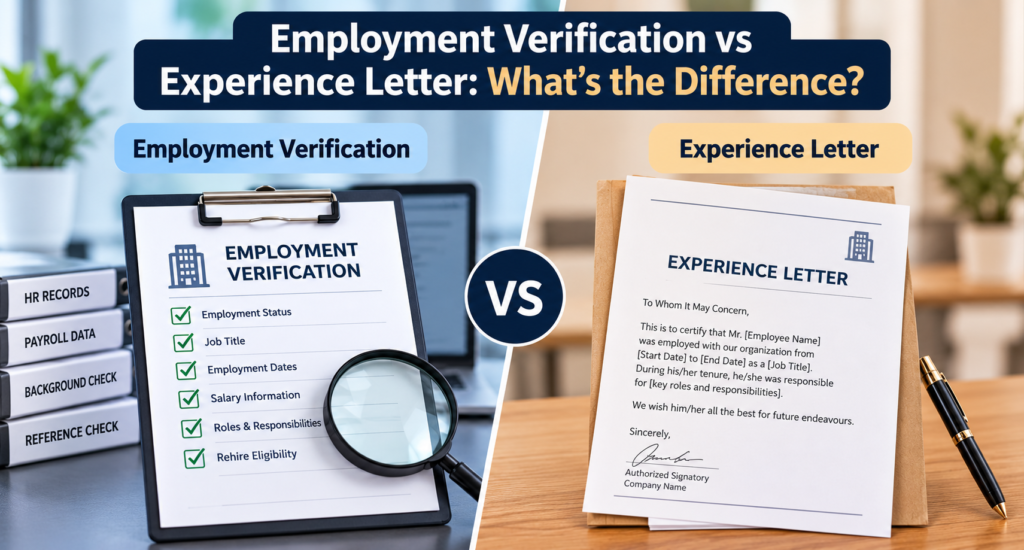
An experience letter is a document issued by a previous employer to record a person’s work experience. Employment verification involves checking whether appropriate sources can confirm the candidate’s stated employer, dates, designation, and other relevant details. An experience letter can support a verification check, but it is not the same as independent employment verification. This […]
Employment History Verification: What Employers Can Check
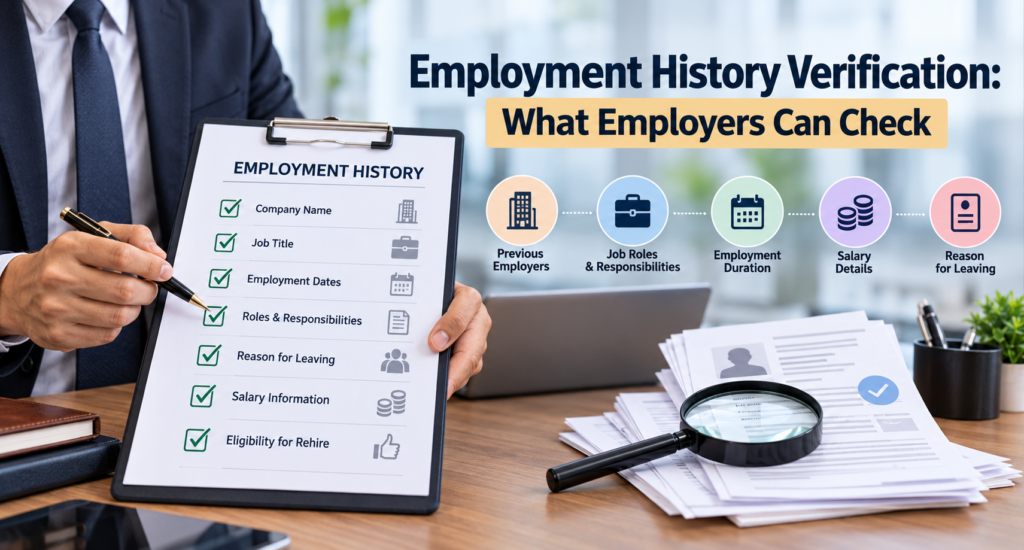
Quick answer: Employment history verification is the process of checking whether a candidate’s previous employers, job titles, employment dates, responsibilities, and other work details are accurate. Employers may review application forms, experience letters, payroll records, references, UAN or EPFO-related information, and confirmation from previous employers. The exact checks should match the role and be carried […]
How to Verify Previous Employment in India
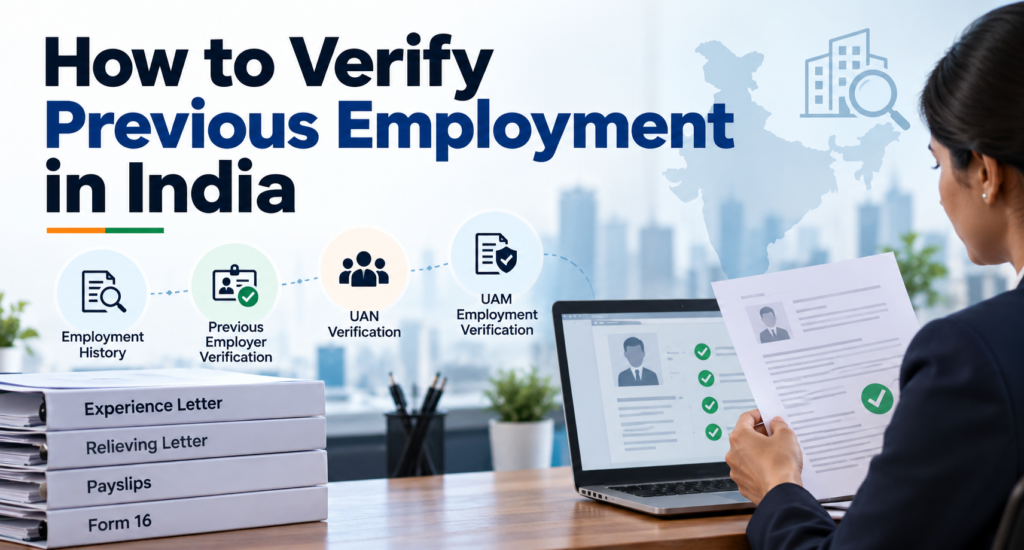
Employers verify previous employment to confirm a candidate’s work history, role, dates of employment and, where relevant, reason for leaving. A careful check can identify accidental errors, unexplained gaps or material misrepresentations before an appointment is finalised. It should not, however, become an unrestricted search for personal information or an automatic reason to reject a […]
UAN Verification Online: How Employers Can Verify Employment History
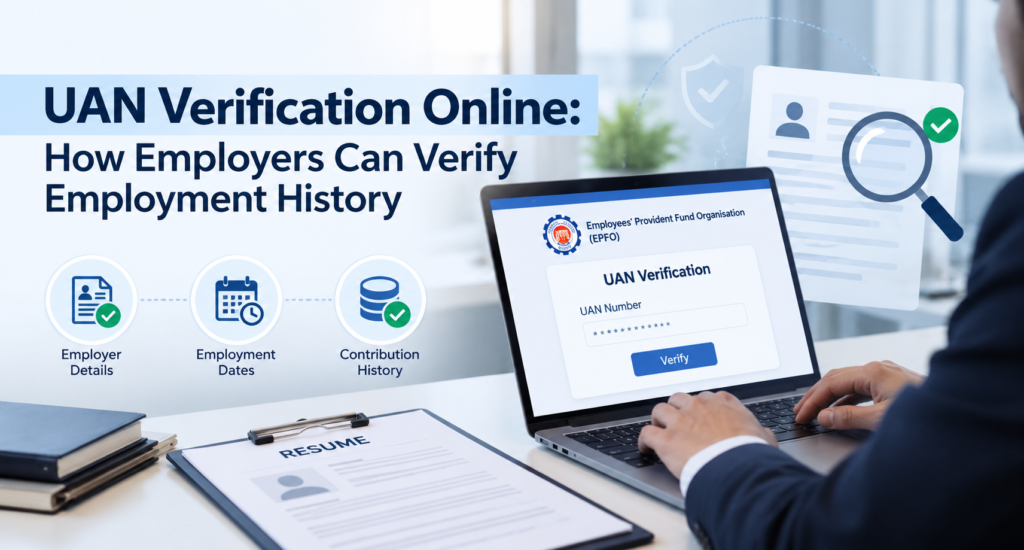
Quick answer: Employers can use an authorised UAN verification process to compare available EPFO-linked records with a candidate’s resume and documents. This may help check recorded employers, contribution activity, and employment dates. It does not prove a candidate’s complete work history, job title, salary, or performance on its own. Hiring teams often face a simple […]
UAN Employment Verification: What HR Teams Can Check—and What They Cannot
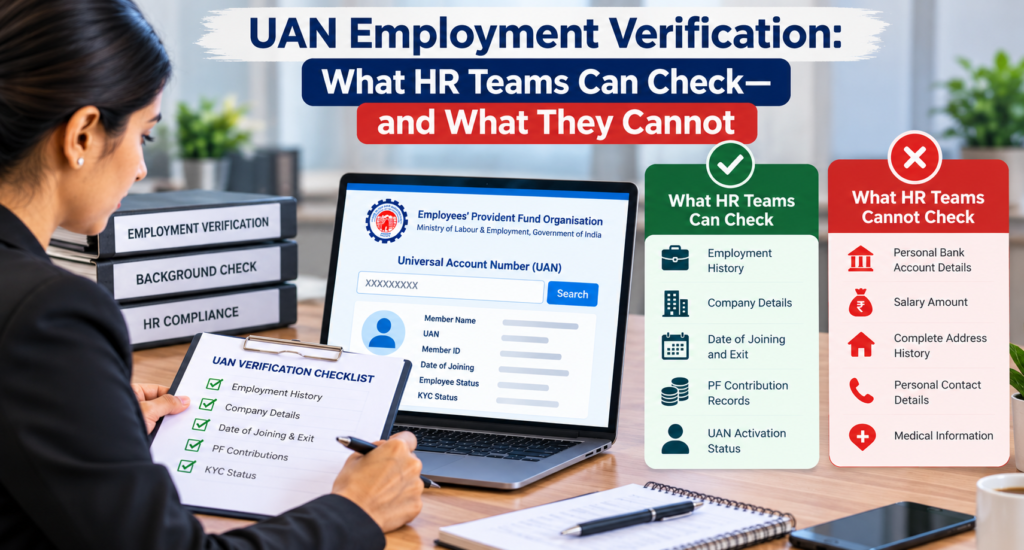
Short answer: UAN employment verification uses available EPFO-linked records to cross-check a candidate’s employment information. It can support checks of recorded employers, contribution activity, and some employment dates. It is not a complete work-history report and does not, by itself, confirm designation, salary, responsibilities, or performance. For many HR teams in India, employment verification starts […]
What Is a Background Check? Meaning, Types, Process

A background check is a routine part of hiring for many companies. It helps an employer confirm whether the information shared by a candidate is accurate before the person joins the organisation. The check can be as simple as confirming previous employment. For a sensitive role, it may also cover identity, education, address, criminal records, […]
What Is Background Verification? Meaning, Process, Types & Checks

A Complete Guide for HR Teams By Suvarna Singh – CEO & Co-founder, Quinfy Technology Pvt. Ltd. Hiring does not end when a candidate clears an interview. A resume can tell an employer where someone says they worked, what they studied, and which qualifications they hold. Background verification checks some of those claims against relevant […]
Automated Employment Verification: Benefits for HR Teams in 2026

Why Are HR Teams Rethinking Employment Verification? Employment verification has always been part of responsible hiring. Before bringing an employee into the organisation, companies need confidence that the experience listed on a resume is accurate. They also need to verify that previous jobs are genuine and correct employment dates have been stated. Automated employment verification […]
Aadhaar eKYC vs Physical Verification: What Should Businesses Use?

Why is the significance of Aadhaar eKYC vs Physical Verification in businesses? Whether a company is hiring employees, verifying vendors, or screening consumers, identity verification has become a standard component of onboarding. However, the manner in which businesses manage KYC is evolving rapidly. In the past, the majority of organisations relied on manual verification, in-person […]
Background Verification Risk Assessment: Why Resume Fraud Drops After Hiring a BGV Partner

Introduction If you work in HR, talent acquisition, or risk management, you have likely heard a common industry claim: a large percentage of resumes contain inaccuracies or misleading information. If resume fraud is so common, why do the numbers suddenly decline once a formal screening process begins? The answer usually has less to do with […]